
The Truth Behind the Test.
Get clear, straightforward answers about polygraph examinations—what they measure, what
happens during an exam, and what clients should consider before making a decision.
WHAT TO LOOK FOR IN A POLYGRAPH EXAMINER
Choose Experience. Expect Integrity. Trust the Process.
essential to obtaining accurate, reliable results you can trust.
Be Certified & Trained
Look for examiners with recognized professional training and certification in polygraph science and ethics.
Have Experience That Matters
Years of conducting polygraph examinations help build professional judgment, accuracy, and credibility.
Follow Ethical Standards
A professional examiner follows a strict code of ethics, ensuring fairness, respect, and confidentiality throughout the examination process.
Use Proven Techniques
Science-based examination methods and quality equipment help ensure accurate and reliable results.
Provide Clear, Professional Service
From scheduling to results, you should feel informed, respected, and confident throughout the process.
ABOUT OUR APPROACH
Professional standards
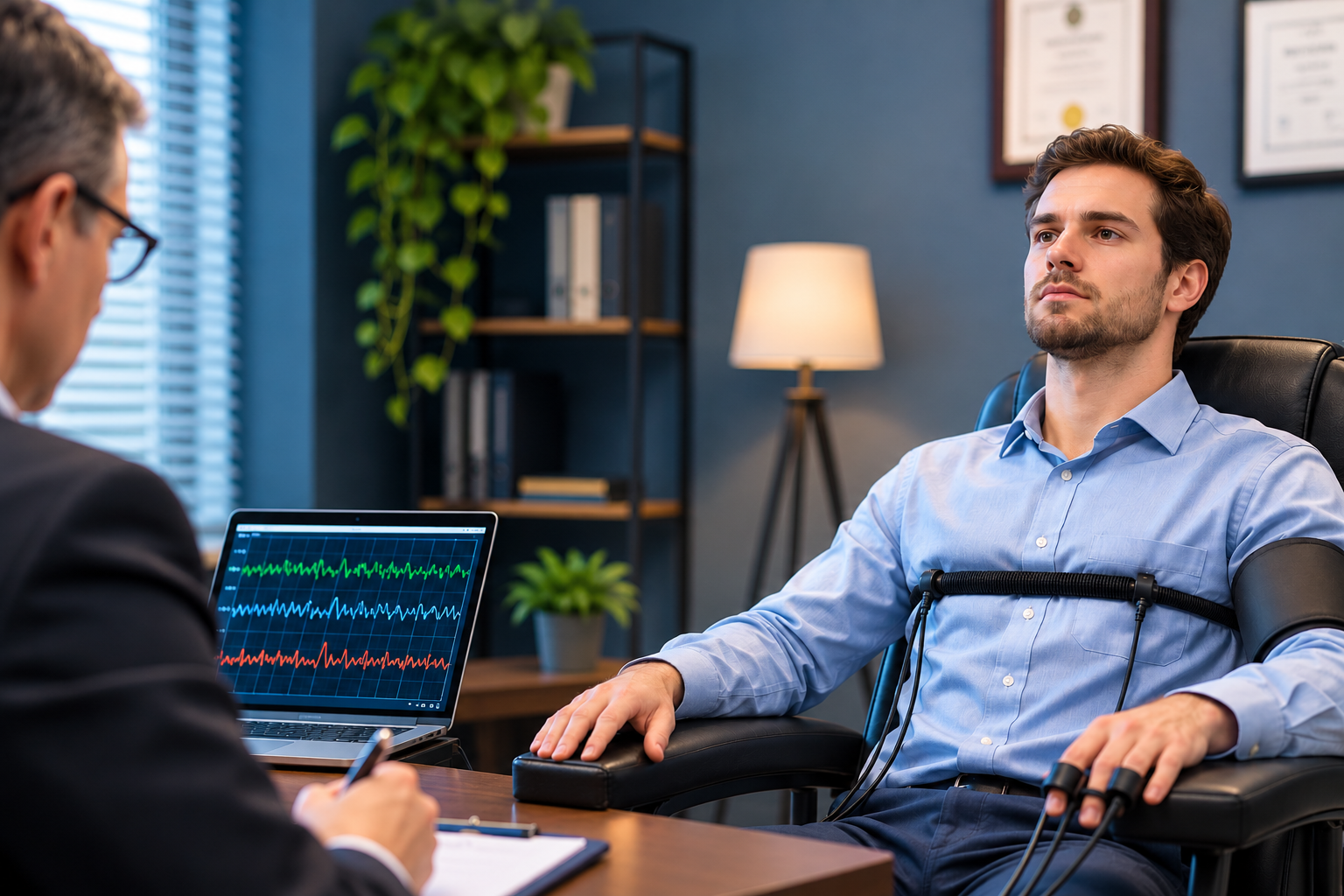
Learn about discretion, impartiality, respectful treatment, and clear communication.
MYTH vs FACT
- A polygraph measures physiological responses to stress while a person is answering questions. It does not “read” your mind.
- Countermeasures may affect results, but trained examiners are skilled at detecting attempts to manipulate the test.
- Polygraphs do not measure emotions like anger or guilt. They measure involuntary reactions to relevant questions.
- While polygraph results may not always be admissible in court, they are widely used in pre-employment screening, investigations, and private matters.
What does a
polygraph measure?
Explore the main physiological channels commonly recorded during a
polygraph examination.
Measurement 01
Breathing patterns
Pneumograph sensors record changes in breathing activity, commonly from bands placed around the chest and abdomen. These recordings show changes in respiration during the test.
What is recorded
Rate, depth, and pattern of respiration.
Why it matters
It is one channel considered alongside other recordings.
Measurement 01
Cardiovascular activity
A blood-pressure cuff or related sensor records cardiovascular activity, such as pulse and relative blood-pressure changes, during the examination.
What is recorded
Pulse and cardiovascular changes.
Why it matters
Patterns are reviewed with the other physiological channels.
Measurement 01
Electrodermal activity
Sensors, often attached to fingers or the hand, record changes in skin conductance associated with sweat-gland activity.
What is recorded
Changes in skin conductance.
Why it matters
It reflects physiological arousal, not a specific emotion or a lie.
Measurement 01
Interpretation and context
An examiner considers the recorded channels in the context of the test format, questions, interview, and relevant circumstances. The instrument does not make an independent determination of truth.
What is recorded
The polygraph instrument’s components include one Thoracic Pneumograph Tube and one Abdominal Pneumograph Tube, which record respiration; one Galvanograph, which records galvanic skin conductance; and one Cardiosphygmograph, which records relative blood pressure and pulse rate. The Examiner then analyzes the information (tracings/data) recorded by these components.
Why it matters
G.G.P.S. uses only experienced polygraph examiners who are trained to review all data and conduct a forensic assessment of the Examinee’s physiological responses using an approved Numerical Scoring System for Credibility Assessment, as recognized by the Defense Academy and the ASTM Forensic Psychophysiological Standards. This ensures results the client can trust.
CAN YOU CHEAT A POLYGRAPH?
The Truth You Should Know.
It is extremely difficult to influence a polygraph examination when the examiner is skilled, the test is
properly conducted, and proven examination techniques are used.
YOUR BODY REACTS INVOLUNTARILY
A polygraph measures physiological responses—things you cannot consciously control, including heart rate, blood pressure, breathing patterns, skin conductance.
These physiological changes are recorded and evaluated together during the examination.
EXAMINERS ARE TRAINED TO DETECT DECEPTION
Certified examiners use established examination techniques to identify potential attempts to manipulate results. Professional training and experience help examiners recognize irregularities and assess examination data.
MODERN POLYGRAPH TECHNOLOGY IS HIGHLY SENSITIVE
Today’s polygraph equipment uses sophisticated sensors and recording technology to capture subtle physiological changes.
These detailed recordings provide examiners with valuable information to analyze and interpret during the examination.
Examination
See the typical stages, from the initial consultation through the post-test review.
Post-test review
Learn which credentials, communication standards, and practices to look for.
Reporting
Learn about discretion, impartiality, respectful treatment, and clear communication.
Professional.
Confidential. Objective.
G.G. Polygraph & Interview Services describes its approach as grounded in experience,
integrity, discretion, and respectful treatment.
Professionalism
A structured process and clear from the first conversation through the examination.
Confidentiality
Sensitive information is handled discreetly, disclosure terms discussed before testing.
Impartiality
A respectful, objective approach focused on the examination—not taking sides.