
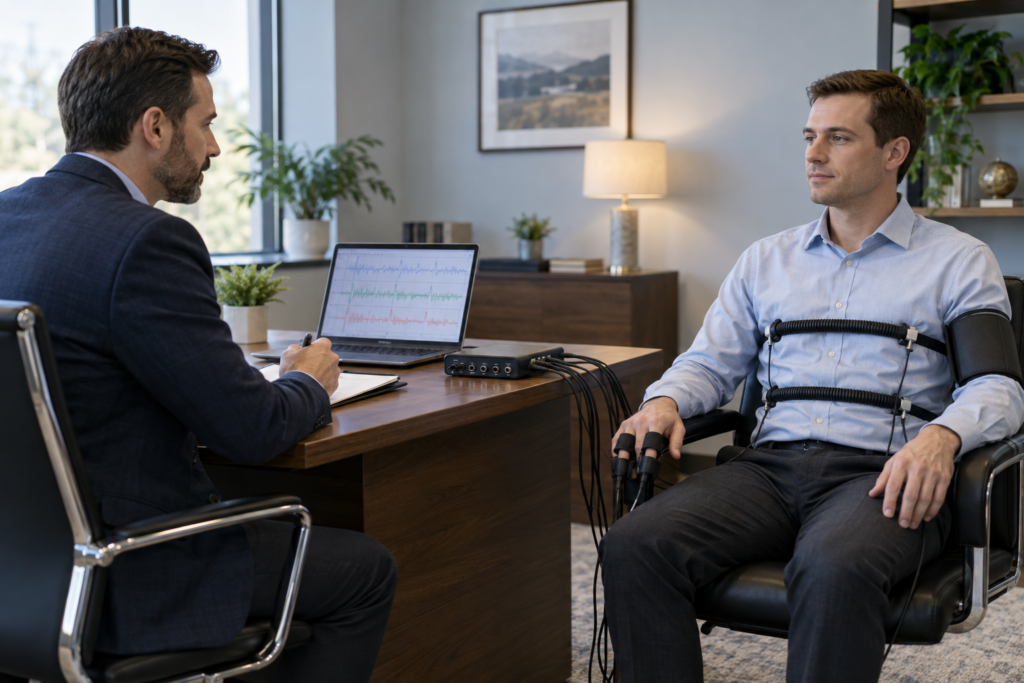
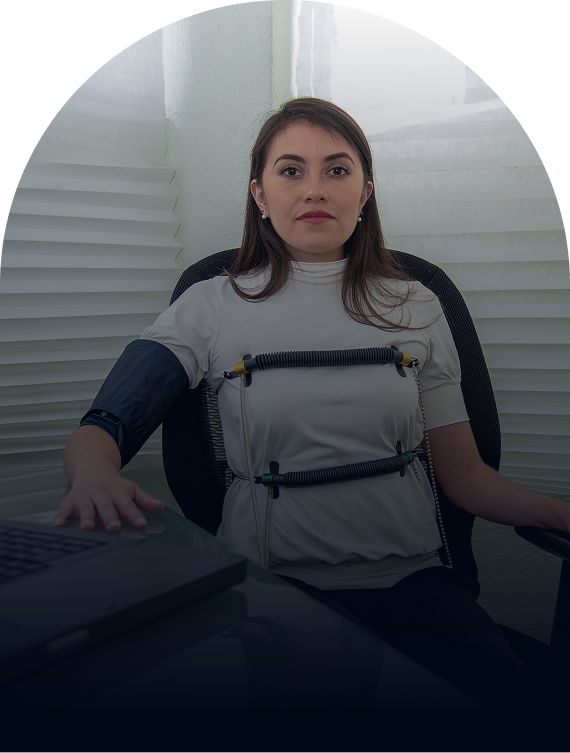
G.G. Polygraphs & Interview Services LLC provides professional and confidential polygraph testing throughout the Pittsburgh and surrounding Pennsylvania area.
01
Initial consultation/determination
of the purpose of the examination.
02
Pre-test interview
and review of the relevant issue.
03
Development and review
of appropriate questions.
04
Polygraph examination
using professional equipment.
05
Post-test review
and professional evaluation.
06
Preparation
of the appropriate report or documentation.
Professionalism, People can trust when it really matters.
For government, attorney, post-conviction or other specialized testing, pricing may vary based on the type of examination. Speak with a member.
What is a polygraph examination?
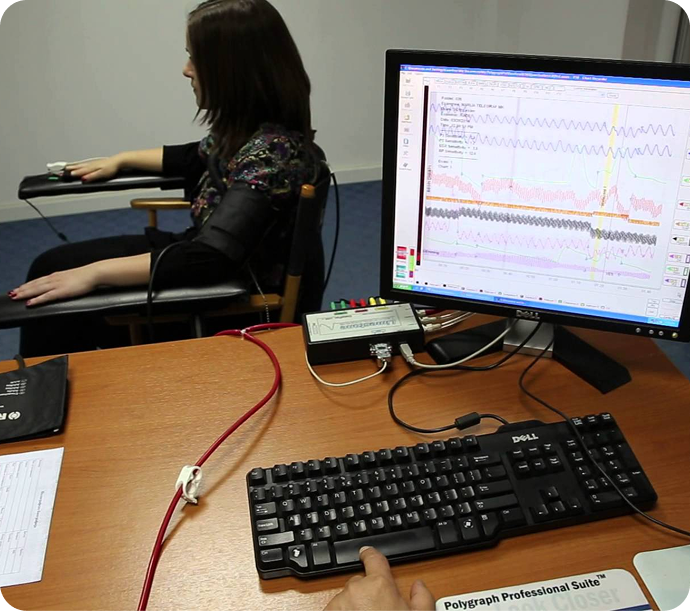
The polygraph is a scientific instrument that records and displays physiological responses to test items. Modern polygraphs are computerized and include specialized software to aid the examiner. The word polygraph derives from Greek words meaning “many writings.” It refers to the multiple tracings that polygraphs display. The term itself dates at least to mid-19th-century scientific writings about a device for recording multiple channels of physiological activity for medical purposes. Today, polygraph almost always refers to the device used for veracity testing.
How accurate is the polygraph?
Polygraph approaches and applications vary, and accuracy varies across them. In a 2003 meta-analysis by the US National Research Council, the median accuracy for event-specific testing, or testing on single issues, was estimated at 85% to 90%. This estimate was based on a range of polygraph techniques, from unvalidated to experimental to the best available. Subsequent research that focused only on techniques that employed empirically derived practices converged on decision accuracy near or slightly above 90%. Lower accuracy is expected in multiple-issue and screening testing. These accuracies will vary as a function of how many relevant questions are used and how broad they are: the fewer and more narrowly defined the relevant questions, the higher the accuracy. As with all assessment methods, the training and competency of the testing examiner can affect accuracy.
Can someone be forced to take a polygraph examination?
No. Polygraph testing requires the examinee's voluntary cooperation, both legally and practically. Polygraph testing may be required for certain opportunities (e.g., securing a government security clearance, as a condition of probation, or becoming a sworn law enforcement officer), but an individual is not obligated to pursue opportunities that require a polygraph.
Does polygraph testing cause discomfort?
In the past, some people were uncomfortable with the pressure from the older blood pressure cuffs. Modern computerized polygraphs use much lower pressure. Complaints about discomfort during polygraph testing are very rare today.
How long does a polygraph examination take?
Most polygraph examinations take 90 to 120 minutes, most of which is a standardized interview before testing. Examinations may take longer for complex issues.
How many questions are on the test?
It depends on the test type; the science behind a particular technique determines the number of questions allowed. Generally, examiners use between two and four questions about the test issue, along with a small number of other questions included for technical reasons, for a total of about 10 – 12 test questions. Some techniques use fewer questions, but those questions are repeated several times within each test so that the total number of question presentations is about 10 – 12. The test questions are based on the examinee's answers during the interview, and the examiner and examinee negotiate the final wording before testing. Modern polygraph techniques include no surprise questions.
Can nervousness affect the test results?
Everyone who takes a polygraph examination is nervous. This is expected. As everyone knows, anxiety can elevate one’s heart rate, blood pressure, and other physiological functions. During polygraph testing, however, this heightened state becomes the examinee’s normal pattern. Elevated blood pressure alone does not cause a person to fail a polygraph examination. Examiners are only interested in changes from the person’s normal pattern. While examiners take steps to reduce the jitters most examinees experience, there is no evidence that anxiety itself causes truthful people to fail or deceptive people to pass polygraph testing.
Will fatigue affect the test results?
Fatigue will not cause a person to pass or fail a polygraph test. Extreme fatigue may necessitate rescheduling an examination, but normal day-to-day weariness will not.
What should I do to prepare for my upcoming polygraph?
Continue normal day-to-day activities. Do what you can to arrive for your examination without the distractions of fatigue, hunger, or discomfort. Continue taking your prescribed medications as directed by your provider. Avoid excessive use of stimulants or unnecessary over-the-counter medications before the examination, as they may cause the session to run significantly longer than normal. Set aside all other obligations and appointments for the time of your examination. Be prepared to work with the examiner to resolve the matter being tested.
Can someone be with me during the polygraph?
Examinees may have someone accompany them to the examination site. Third parties are not permitted in the test room unless they are necessary for the conduct of the exam (e.g., interpreters).
How much does a polygraph cost?
As with all professional services, fee structures can vary based on the type of service, time involved, complexity, required expertise, and any additional travel expenses. Fees are determined by the examiner.
Is my information confidential?
YES. The test is completely confidential. Disclosure of the results is limited to those listed in an agreement signed by the examinee and the examiner before the examination, unless otherwise specified by law.
How do I schedule an examination?
If you are considering a polygraph examination and would like to discuss your situation, contact G.G. Polygraph & Interview Services. Submit your information through the website, and a representative will follow up or call. You can also call our 24/7 live-person answering service at 412-586-4220. A representative will contact you within approximately 48 hours.
do not publish one universal price. Different examinations may involve different circumstances, time requirements, locations, travel, or service arrangements. As with all professional services, fee structures can vary based on the type of service, time involved, complexity, required expertise, and any additional travel expenses. Fees are determined by the examiner. 'Contact G.G. Polygraph & Interview Services for pricing and to discuss your specific examination needs.'